Jul 24, 2026 · 9 min read
The Complete Guide To Sending Money From the UK to Ghana in 2026: Rates, Apps, Fees and Everything Nobody Told You
Sending money from the UK to Ghana in 2026 offers more options than ever, but navigating the true cost requires looking beyond the headline exchange rate. This guide provides a comprehensive comparison of money transfer apps. It breaks down the hidden fees & markups that often eat into your transfer
By Super Admin

Over $4.7 billion, is the huge amount Ghana sees each year, sent home by its diaspora each year . A pretty big and growing portion of that total comes from Ghanaians living right here in the UK. These are students, nurses, engineers, entrepreneurs, parents, siblings, and so many others. For many, sending money back isn't an afterthought; it's a real responsibility.
If that sounds like you, then I've put this together with you in mind.
So, what I'm hoping to lay out for you here is a really honest, thorough look at sending money from the UK to Ghana. We're going to talk about the GBP to GHS exchange rate, those sneaky hidden fees, which apps are actually worth your time, the best days to make your transfer, and why the service you pick can make a much bigger difference than you might think.
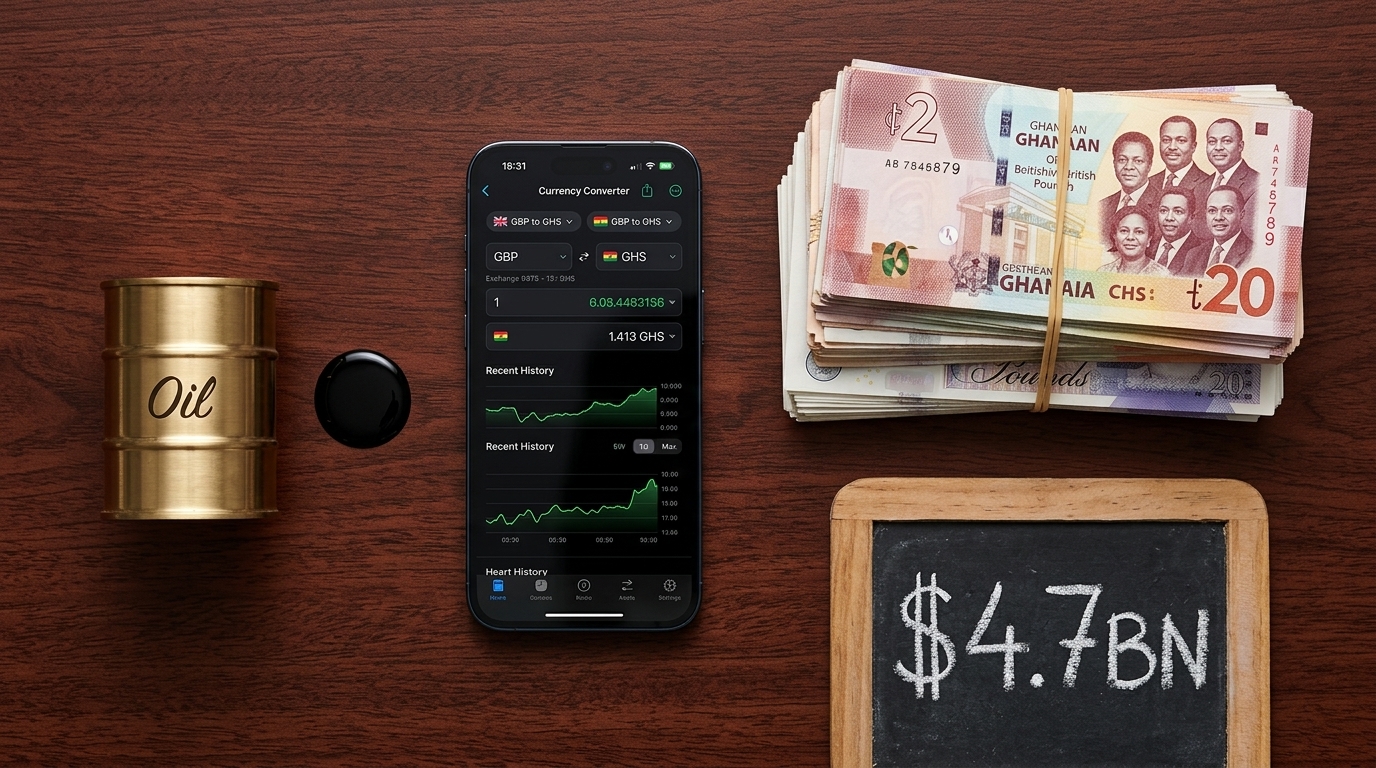
Back in 2023, Ghana got an estimated $4.7 billion in remittances. That's actually more than the country earned from oil and every single person sending money from the UK, is playing a part in that.
Understanding the GBP to GHS Exchange Rate in 2026
Now, let's talk about the GBP to GHS exchange rate, because honestly, it's the most crucial number when you're sending money to Ghana from the UK as far as remittance is concerned. In April 2026, you'll find the rate sitting somewhere around 14.8 Ghanaian cedis for every British pound. So, if you send £100, that's roughly GHS 1,480. This is pretty wild when you think about it; just five years back, that same £100 might have only gotten you around GHS 700.
The cedi has seen its share of ups and downs over the last few years, really pushed around by Ghana's debt situation, requirements from its IMF program, and what's been happening with commodity prices globally. With the IMF's Extended Credit Facility in place, Ghana has been working on tightening its finances, and that's actually helped the cedi hold steady and even gain some ground at times. So far this year, in 2026, the pound has actually strengthened by about 3.6% against the cedi. What that means for you is that right now, if you're sending money from the UK, you're getting a bit more cedis for each pound than you would have at the beginning of the year.
So, what does all this actually boil down to for you? Well, imagine you sent £200 back in January 2026, and you're sending that same amount today. Your family would actually get about GHS 100 more, without you changing a single thing on your end. Knowing about these exchange rates really is like finding free money.
Now, let's talk about something really important: those hidden fees that are costing people millions when sending money from the UK to Ghana.
The Hidden Fee That Costs UK-Ghana Senders Millions
Every transfer service makes money on your transfer. The question is how they make it and whether you can see it. There are fundamentally two models: fee-based and spread-based.Fee-based model: With a fee-based model, they'll charge you a clear fee right upfront. Say you're sending £200, it might be £3.99. The exchange rate they offer in this case is usually pretty close to what you'd see on the mid-market. So, what you see is generally what you're paying. This is literally how SendBuddie operates.
Spread-based model: These platforms often boast about having 'zero fees,' but what they do instead is give you an exchange rate that's worse than the actual mid-market rate. That difference is what they call the 'spread'. That's where they make their profit. So, if you're sending £200 and there's a 4% spread, you're actually paying £8 in hidden fees. Your screen might say '£0 fee,' but when you do the math, it tells a different story, and that one is your reality.
Knowing which of these models your app is actually using makes all the difference. So, it’s either you're sending money with confidence or you're doing it somewhat blindly. The World Bank, for what it's worth, suggests that the total cost of a transfer, meaning all the fees plus any exchange rate margin, shouldn't really go beyond 3% for any corridor.
But when you look at a lot of the popular apps for sending money from the UK to Ghana (especially to Africa), once you add in the exchange rate markup, many of them are actually charging somewhere between 5-8% in total.
So, when is the best time to send Money to Ghana?
First, be aware that the currency markets aren't just sitting still. The GBP/GHS rate is always moving, shifting throughout the week. It reacts to how much currency is being traded, any new economic figures coming out of the UK or Ghana, and just the general feeling of the global market. While you can't guarantee a perfect day, you do start to notice some patterns.
They include the following:
• Generally, Thursday and Friday mornings (UK time) often seem to give the pound a bit of an edge. By then, the week's economic news has usually settled in, and African markets are still pretty active.
• A lot of people tend to send GHS to Ghana on Sunday evenings and it makes sense if payday was Friday. You've probably been chatting with family over the weekend. But often, this time falls into what are called 'lower liquidity windows,' which isn't always ideal.
• Try to steer clear of sending money when the Bank of Ghana's Monetary Policy Committee is meeting or has just announced a rate decision. Things can get really volatile for about 24 to 48 hours around those times.
• And keep an eye out for days when the ONS releases UK inflation and GDP figures, usually on Tuesdays and Wednesdays. These can also stir up a lot of volatility for the pound.
Here's a little tip: set up a Google Alert for 'Bank of Ghana MPC' and 'ONS CPI release' or get the SendBuddie app to check live rates. When those days roll around, make sure you actually check the rate before you hit send, instead of just sending on autopilot like usual.
To make all this a bit more tangible, let's look at what a £300 transfer from the UK to Ghana actually translates to for your family, depending on which service you choose, and based on pretty typical market conditions.
• If you could get the pure mid-market rate (that's the one you see on SendBuddie): you'd be looking at roughly GHS 4,440. With a platform like ours, that offers a really strong rate, say 98% of the mid-market: that's about GHS 4,351.
• Now, if you're using a platform that applies a 5% spread: you'd get around GHS 4,218. That's a difference of GHS 222 from the best rate – enough to cover a week's worth of groceries in Accra.
• And if you go through a high-street UK bank, which might have a 7% spread: that's closer to GHS 4,129. The difference from the best here is GHS 311, which could be about a month's worth of school transport.
So, if you're sending £300 every month over a year, the gap between the best and worst platforms can easily be around GHS 3,732. That's a significant sum that really belongs with your family, not in fees.

The Ghana Corridor: What Your Money Builds
Let's pause on the technicalities for a bit, and think about the bigger picture: what exactly are you contributing to when your money travels through crossborder remittance, from the UK GBP to Ghana GHS?
The numbers from the World Bank's KNOMAD database show that money sent home by Ghanaians living abroad actually makes up about 6% of Ghana's entire GDP. This makes it one of the biggest sources of foreign currency for the whole economy; it's even been more significant than direct foreign investment in recent years. In fact, the IMF, in its Ghana programme, has pointed to the steady flow of remittances as crucial for helping Ghana's external accounts recover.
Looking at individual households, studies consistently reveal that money sent to Ghana mostly goes towards education: that's the top category by a long shot. After that, people tend to spend it on things like healthcare, housing, and getting small businesses off the ground. So, your £100 each month isn't just about covering day-to-day expenses; it's definitely helping to build a future for the next generation.
Think about it:
In Ghana, these remittances actually fund more university spots than all government scholarship programs combined. Every time you send money each month, you're directly contributing to someone's future.

Picking the Best Platform (apps) for UK to Ghana Money Transfers
When you're looking at platforms for sending money from the UK to Ghana in 2026, a few things really stand out as most important: how clear they are about exchange rates, how fast the money arrives, whether you can count on it being delivered, and of course, what their fees look like. It's rare to find one that truly shines in every single one of these areas.
You'll find some platforms that give you fantastic rates, but then the money takes a while to arrive. It may fall between 24 to 48 hours. That can be pretty stressful when you're dealing with time-sensitive payments like school fees, urgent medical needs, or bills that are due. On the flip side, others are super fast but come with higher costs. What you really want is a platform that's upfront and clear about both the speed and the fees.

SendBuddie, for instance, was actually designed with the UK-Africa corridor in mind. This means the UK-Ghana remittance route isn't just an extra feature; it's a central part of what they do. Before you even hit confirm, you'll see the precise exchange rate, the exact fee, and the exact amount in cedis your loved one will get.
For Ghanaians in the UK who send money regularly and really need to avoid any surprises, this kind of clarity is incredibly important.
The UK-Ghana corridor carries hundreds of millions of love, obligation, hope and investment every year. The platform you use to carry that love should be worthy of what it represents. When you choose SendBuddie, you lose absolutely nothing and your loved ones in Africa receive the money? They get everything.