Jul 2, 2026 · 6 min read
Should You Build Your Own Life First or Send Money Home Immediately? Proven insights, facts and framework Most Africans Abroad Wish They Knew Earlier
Every African abroad eventually faces the same difficult question: should you start sending money home immediately or focus on building your own financial foundation first? This article explores the facts, emotional realities, and proven framework that can help you make a decision without guilt.
By Super Admin

Almost every African abroad has wrestled with this question at some point. There’s no doubt that it has probably caused more silent guilt, family tension, and sleepless nights than almost any other financial decision Africans abroad face.
You finally get that first real paycheck while living abroad. The feeling is great until you look at the math. The rent is already due and your savings account is basically sitting at zero. You know you need to start investing in your own future, but then the phone rings. Someone back home is calling because they need money right now. It is an urgent situation. What do you actually do in that moment? Most people think the answer is obvious, but it really isn't. Millions of Africans living overseas deal with this exact pressure every single year. The way you handle that one phone call can end up dictating what the next ten years of your life look like.
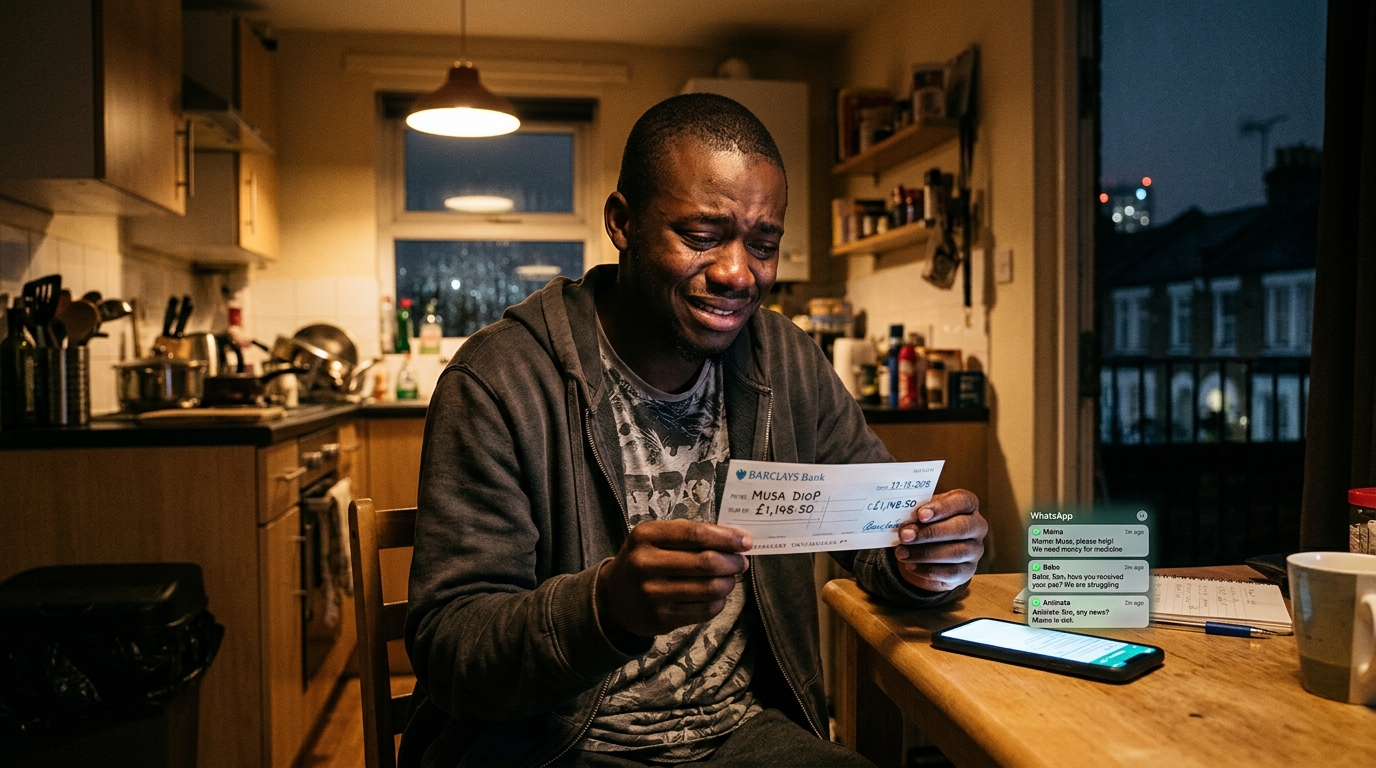
For many Africans, success has never been an individual project. When one person rises, everyone rises or at least that's the expectation. Many people don't migrate alone, though they may physically travel by themselves, however they often carry the hopes of parents, siblings, cousins, uncles, aunties, and entire communities. Take a look at this scenario. One passenger purchases the plane ticket but the expectations boarded with twenty more.
After reality hits you, either of these two paths will stare you to aligning with it:
Path One: The Immediate Supporter: people who start sending money home almost immediately.
The first salary comes in, and support starts. The second salary comes in, support follows again, then the third salary arrives, as usual, requests become more frequent. Over time, these people often become the family's financial pillar. Everyone appreciates them, depends on them until one day they discover they have spent years helping everyone except themselves. No savings, no investments, no emergency fund, no financial cushion. Unfortunately, they discover how they have become indispensable to others while remaining financially vulnerable themselves.

Path Two: The Foundation Builder: These people make a different and unpopular decisions, spending their first few years focusing primarily on themselves like building savings, acquiring certifications, repaying loans, building systems and networks, creating stability until they attain their set goals. In the eyes of some family members, this can look selfish, to others, it looks strategic.
One hard hit is that the criticism often comes early, but the sweet part is the benefits usually come later and if we are being honest, we all know that helping yourself properly may become one of the most effective ways of helping your family.
Think about it.
Who can provide more support over twenty years?
The person constantly surviving crisis after crisis or the person who becomes financially stable, professionally successful, and emotionally secure? The answer is usually obvious.
The Mathematics of Sacrifice
Let's look at a simple example. If Kwame sends $200 every month from the beginning. Over ten years, $24,000 is sent home. In contrast, Aniah spends two years building a stronger foundation. She improves her income, build savings, advance her career and begin sending $500 monthly.
Over the next eight years, $48,000 would have been sent home. That is two times more than Kwame's.
Although, it doesn't establish that one strategy is always superior. However, it's proof that short-term sacrifice can sometimes create long-term impact. The goal isn't to send first but to sustain support.

The Hidden Danger of Becoming Everyone's Emergency Fund
Many Africans abroad quietly suffer from something nobody talks about enough.
Financial burnout.
At first, helping feels rewarding, then it becomes expected, demanded and eventually exhausting. Before you call Jack Robinson, every problem has your phone number attached to it. From a cousin's school fees to an uncle's hospital bill, a neighbour's business idea, a friend's wedding contribution, even a relative you've never met before and the list keeps going.
The dangerous part is that the better you become at rescuing people, the more rescue missions appear. Sadly, if you choose to ignore building boundaries, your generosity can become your greatest financial risk.
The Hidden Danger of Focusing Only on Yourself
I know you were not expecting this but I have to be fair. The opposite extreme can be harmful. Some people become so focused on "building themselves" that they disconnect entirely.
Years pass, relationships weaken, trust disappears, family bonds become transactional and other things go south. None of this is the goal either. Financial success means very little if it comes at the cost of every meaningful relationship, hence balance matters.
The Framework Most Successful Diasporians Eventually Discover
After observing countless diaspora journeys, a simple framework appears repeatedly.
Let's call it the Foundation First Framework.
Secure Survival: before helping others consistently, secure your own basics. E.g Housing, food, transportation, healthcare. You cannot sustainably help anyone while your own life remains unstable.
Build an Emergency Fund: Life abroad is unpredictable. From job loss to unexpected expenses, family emergencies, medical situations etc. Emergency fund isn't selfish, it is protection for you and everyone who may eventually depend on you.
Create a Family Support Budget: This changes everything. Instead of reacting emotionally to every request, decide in advance what you can comfortably afford whether it's €100, €200 or €500. Bear in mind that the amount matters less than the consistency.

Communicate Honestly: Many misunderstandings happen because families don't know what life abroad actually costs. They don't see your expenses but see your country. It is necessary, that you take up the duty of talking about your reality. Not defensively, or angrily but honestly. You may be surprised by how much understanding follows.
Increase Support as You Grow: As your income grows, your capacity to help grows. This then creates sustainability rather than sacrifice without end. The strongest support is scalable support.
That being said, I'd like to break the news to you that there is a guilt that keeps many Africans abroad stuck. Let's talk about it breifly.
The Guilt That Keeps Many Africans Stuck
If I am being honest with you, I'd call it the elephant in the room. Many Africans in diaspora feel guilty for: saying no, setting boundaries, prioritising savings, investing in themselves, taking holidays, buying something nice among others. It's almost as if suffering has become proof of love but it isn't.
Love and boundaries can coexist.

So What Is the Right Choice?
The answer is balance and moderation. Staying correctly rather than sending everything or not sending anything. Strategically position somewhere in between. Target building enough stability such that helping others, doesn't impact negatively on your future. Also, maintain a solid ground where you help enough without sinking your relationships.
That balance is key, cardinal and not negotiable.
Let's end on this note...
If you've ever felt torn between your future and your family's needs, you're not alone. Millions of Africans who support family back home, are carrying the same weight. The goal isn't choosing yourself over your family, it is building a life strong enough to support both. There is no need to struggle choosing, between selfishness and generosity. Do well to prioritise choosing between short-term relief and long-term sustainability.
Your future self, and the people you love, will thank you for it.